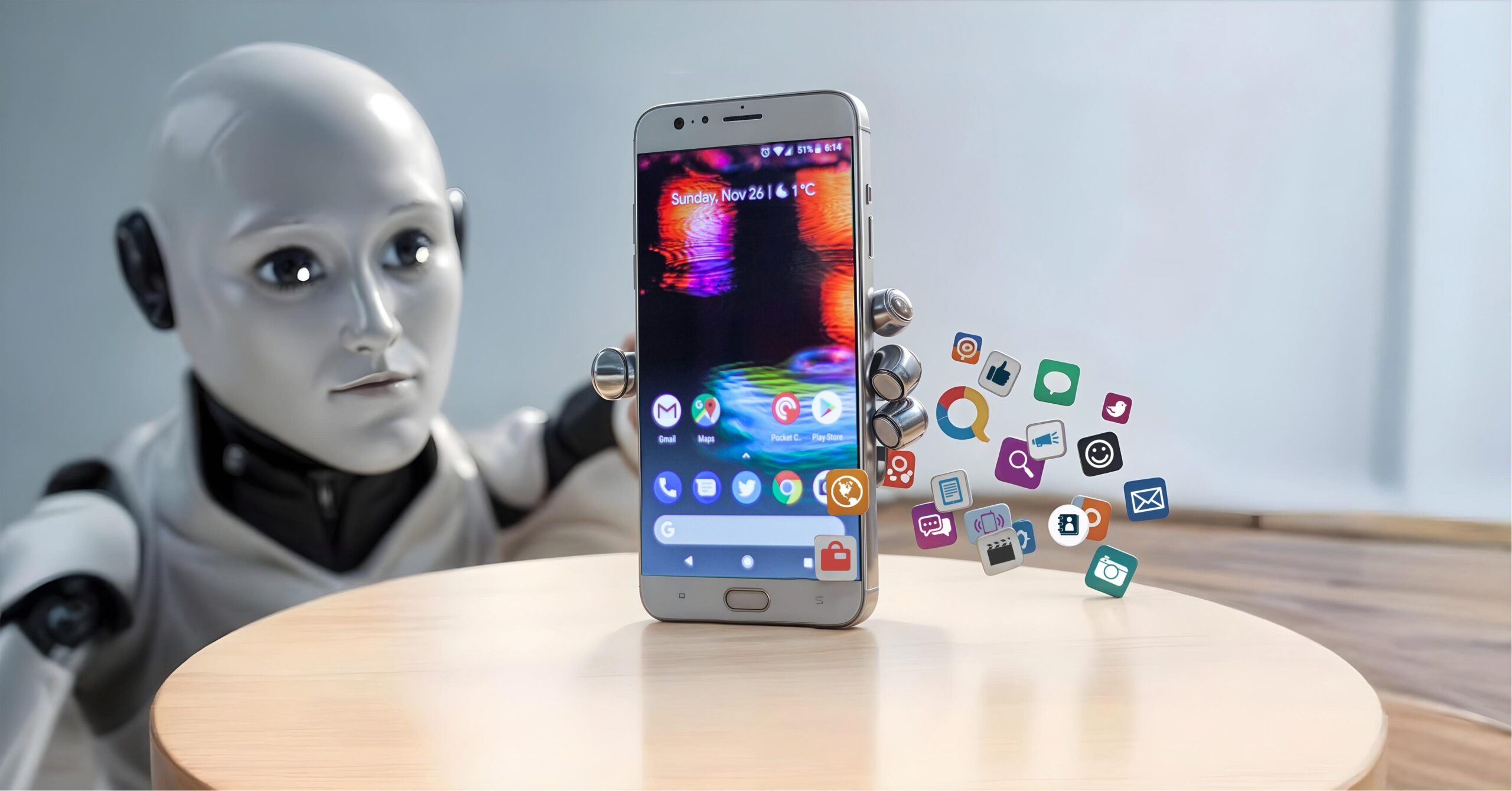
If you look at new phones, whether it’s the iPhone, Samsung, or Google, every one of them is connected to artificial intelligence. Every new phone is marketed with artificial intelligence. All the new phones promise that the AI found in the phone will help improve cameras, provide more intelligent battery management, enhance complex context understanding, and more. But even if we see how many times we use AI features, a question emerges: is AI on smartphones helping in everyday use?
Before artificial intelligence, the main focus was performance gains. That progress slowed down for big companies, and they needed something new to explore. That is how artificial intelligence entered the smartphone world.
The Real Problem
artificial intelligenceis sometimes extremely hard to measure. Big companies take advantage of that to make a big deal out of it in marketing. That is the new way to make money. The real problem comes when every marketer uses artificial intelligence as a big selling point, but the real impact is close to nothing because smart assistants still struggle with context, intent, and follow-up questions. However, real artificial intelligence is most useful behind the scenes.
Is AI Really Helping?
I am not saying that artificial intelligence is completely useless; it does help, but in an unnoticeable way. artificial intelligence is a big help in camera processing, scene detection, HDR stacking, night mode, and more. Photos powered by artificial intelligence are more consistent and adapt better to different lighting conditions. In the field of cameras and photography, artificial intelligence is really helpful.
artificial intelligence also comes in handy in battery optimization, where it manages background apps. That helps the battery last longer. Other areas, like spam detection, voice-to-text accuracy, call screening, and Google Photos search, are improving significantly because of artificial intelligence.
Have you ever thought that the real applications work in the background without demanding attention, and people only use a handful of visible artificial intelligence features, like camera processing, keyboard predictions, and background optimizations?
AI Replacing Apps?
One of the main goals of artificial intelligence is not to replace apps but to optimize them. For example, because of artificial intelligence, your phone is much better at detecting mistakes, filtering spam calls, reducing blur in images, and improving predictions.
In Conclusion
The big marketed features are often used once and then forgotten. When we see artificial intelligence features everywhere, it becomes too noisy. The most important ones are those that run in the background. artificial intelligence’s biggest contributions are not flashy features but invisible, preventative, and unglamorous improvements.
Where Should We Concentrate?
Big companies should shift their attention from flashy AI marketing and focus more on reliability, privacy-respecting on-device processing, and deeper system-level integration.
You might be interested in reading this post as well as: